The People of Gibraltar
1830 - Richard Ford - Sketches

A few  years ago I wrote several essays on Richard Ford, a much celebrated mid-19th century British travelogue writer. In one of my articles I quoted the author of one of his obituaries. According to him, Ford’s Handbook for Travellers in Spain – probably his most successful book – was, 

“. . . among the best books of travel, humour,  history . . .  politics and art, in the English language.”  

Very recently, however, I came across the following article wich has made me wonder whether perhaps the obituary writer should have added that by “art” he meant both the literary and the visual varieties. 


The authors of the above article actually offer a different perspective as regards these sketches,

. . . .no tenían pretensiones artísticas, ni intereses editoriales o comerciales, como ocurría con otras vistas de ciudades y monumentos de España realizadas por destacados viajeros y artistas de aquel tiempo. A diferencia de ellos, Ford . . . para conocer y recordar, por simple curiosidad, fascinación o puro placer, para obtener un fiel registro de sus observaciones pocos años antes de la aparición de la fotograf

"Retratos de Richard Ford como majo serio"    (1832 - José Domínguez Bécquer)

Perhaps the best way to make up one’s mind is to have a look at some of the sketches I have posted below, or perhaps even better by checking the following link  to the article in question. (LINK)


“Reaching the Rock of Gibraltar” (1830 – Richard Ford) 
Ford Family Collection – From "Los Dibujos de Richard Ford. . . Gámiz and Pardo


“Apes Hill"” (1830 – Richard Ford) 
Ford Family Collection – From "Los Dibujos de Richard Ford. . . Gámiz and Pardo


“Entrance into Gibraltar” (1830 – Richard Ford) 
Ford Family Collection – From "Los Dibujos de Richard Ford. . . Gámiz and Pardo


Gaucin and the Strait of Gibraltar (1830 - Richard Ford) 
Ford Family Collection – From "Los Dibujos de Richard Ford. . . Gámiz and Pardo


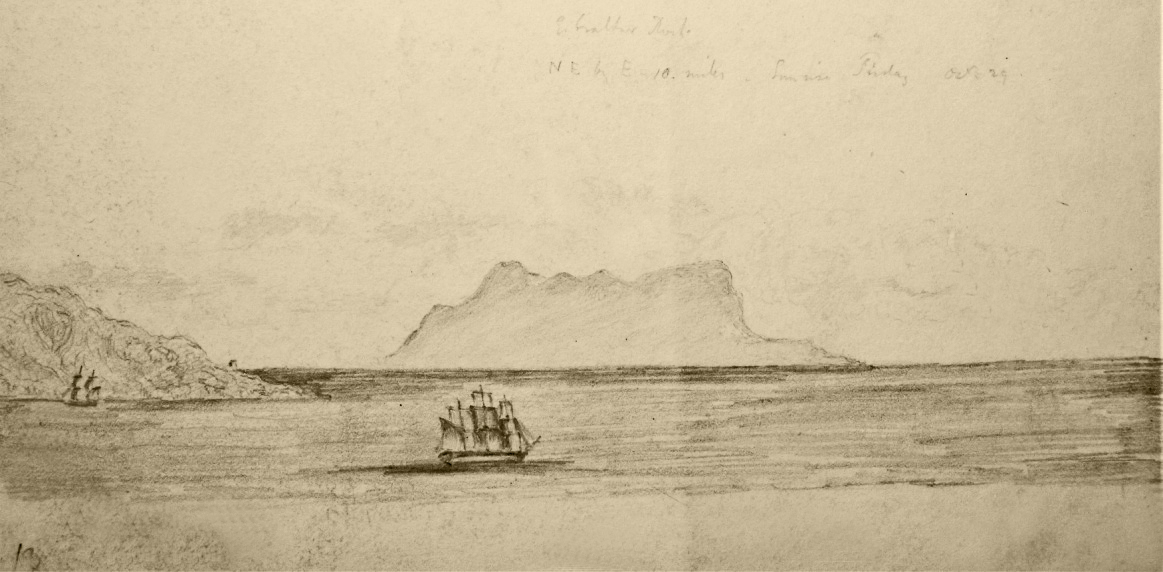
“Gibraltar from Algeciras” (1830 – Richard Ford) 
Ford Family Collection – From "Los Dibujos de Richard Ford. . . Gámiz and Pardo

“Gibraltar from the Rock above” (1830 – Richard Ford) 
Ford Family Collection – From "Los Dibujos de Richard Ford. . . Gámiz and Pardo


“View of Neutral Ground from Willis Battery” (Richard Ford - 1830) 
Ford Family Collection –  Los Dibujos de Richard Ford . . . Gámiz and Pardo


North side of the Rock (1830 – Richard Ford) 
FordFamily Collection –  Los Dibujos de Richard Ford . . . Gámiz and Pardo


“Spanish lines”  (1830 – Richard Ford) 
Ford Family Collection –  Los Dibujos de Richard Ford . . . Gámiz and Pardo


“Moorish Castle. Gibraltar” (1830 – Richard Ford)  
Ford Family Collection –  Los Dibujos de Richard Ford . . . Gámiz and Pardo


“Moorish Castle. Gibraltar” (1830)  
Ford Family Collection –  Los Dibujos de Richard Ford . . . Gámiz and Pardo


                                                     Arabs in Gibraltar (Richard Ford) (Richard Ford)                                                       Ford Family Collection – Los Dibujos de Richard Ford . . . Gámiz and Pardo


Jews, a porter and Spanish women in Gibraltar
Ford Family Collection – Los Dibujos de Richard Ford . . . Gámiz and Pardo


People of Gibraltar (Richard Ford)  
Ford Family Collection –  Los Dibujos de Richard  Ford . . . Gámiz and Pardo


1827 - Andrew Bigelow (LINK)
1820 - Henry Sandham (LINK)  
1821 - Theodore Dwight (LINK)
1824 - James Bucknall Estcourt (LINK­­)
1826 - Thomas Staunton St Clair (LINK) 
1829 - Alexander Slidell-Mackenzie (LINK)
1830 - William Maginn (LINK)  
1830 - Arthur de Capell Brooke (LINK)  
1830 - Frederick Leeds Edridge (LINK)
1830 - Henry D. Inglis (LINK)  
1830 - Amasa Hewins  (LINK)
1830 - Josiah Conder (LINK)
1832 - Commodore Perry (LINK)  
1832 - William Harris Rule (LINK)  
1837 - Pierre Edmond Boissier (LINK)
1837 - Robert Montgomery Martin (LINK)  
1838 - George Dennis (LINK)  
1838 - George Wright (LINK)
1838 - Charles R. Scott (LINK)  
1838 - James Barber  (LINK)
1839 - Mr. Southey (LINK)  
1840 - Edward Delaval Hungerford Napier (LINK)
1840 - Théophile Gautier  (LINK)  
1840 - Rev George Newenham Wright  (LINK)
1840 - Charlotte Paget (LINK)
1841 - George Henry Borrow (LINK)
1841 - Francis Elizabeth Davies (LINK)  
1841 - The Rev William Robertson (LINK)  
1842 - Prince Adalbert of Prussia (LINK)
1842 - Charles Rockwell (LINK)
1843 - J.H. Allan  (LINK)
1843 - John Adam Dix (LINK)
1844 - George Lothian Hall (LINK)
1844 - Martin Haverty (LINK)
1844 - Old Inhabitant’s Traveller’s Handbook (LINK)
1845 - T. M. Hughes (LINK)
1846 - E.F. Kelaart (LINK)
1846 - William Makepeace Thackeray (LINK)
1846 - Alexandre Dumas (LINK)
1848 - Thomas Debary (LINK)
1848 - David Urquhart (LINK)
1849 - William George Clark (LINK)


With thanks to Rafael Fernandez who pointed me in the right direction for this one as he has done for many of my other essays.

Thank you also to Antonio 
Gámiz  Gordo and Juan Carlos Pardo Gonzaléz.  I hope they will forgive me for using their wonderful work.

See als0 the following links.

1846 - Richard Ford - A Nasty Taste in the Mouth
1855 - Richard Ford - A Cloacal Nuisance
1855 - Richard Ford - Quotes


1827 - Andrew Bigelow  (LINK)


Introduction - Don't Mention the War


In 1704 the Spanish town of Gibraltar capitulated after being attacked by Anglo-Dutch forces. The surrender was to the Hapsburg pretender to the throne of Spain, and not to any foreign power. It is something that is easy to forget given Gibraltar’s subsequent history. Even as late as 1994 Joe Bossano, then Prime Minister of Gibraltar, made just this mistake when he addressed the United Nations trying to make a case for the self determination of the Colony.


The majority of books about Gibraltar have mostly been written by Englishmen who also happened to be military men. There is much interest in matters of war, on imperial struggles for power and very little about anything else. The emphasis is on triumphalism with the Rock as an icon of military power and - after the Great Siege - of national pride. When the place was linked with Nelson and Trafalgar, it became a double symbol of the indomitable and tenacious character of the English both on land and at sea.


All these histories invariably fail to comment in any depth on how the civilian population of the Rock coped with the upheavals brought about by an overwhelming military presence or how they dealt with life in an atmosphere permeated by war. This failure is easily understandable. Gibraltar is one of the most fought over and most heavily fortified places on earth. For centuries, and long before the British arrived on the scene, it was directly involved in innumerable wars, sieges and skirmishes. There was little change after 1704.


The War of the Spanish Succession, the 12th Siege of Gibraltar, the Gunner’s War, the War of Jenkins’s Ear, of the Austrian Succession, the Seven Years War, the Great Siege of Gibraltar, the French Revolutionary Wars as well as the Peninsular War - all took place during the eighteenth and early nineteenth century. All of them impinged directly or indirectly on Gibraltar.

There was little time and even less inclination to discuss the activities of a population of what were essentially camp-followers and whose numbers were at first always relatively small in comparison with the military garrison. But even during the nineteenth century when books about war were replaced by travelogues and guide books, the emphasis was on long descriptions of the Rock of Gibraltar itself, its formidable garrison and its imposing military fortifications. There are constant obsequious references to its Governors and its military heroes but when mention is made of the local non-British inhabitants the observations tend to range from the indifferent to the down-right contemptuous.


It is a Victorian conceit that the history of the Gibraltarian people is somehow synonymous with its military history and that the social history of Gibraltar really only starts some time after the beginning of the twentieth century by which time the place could be identified as a Fortress Colony rather than just a Fortress.

For me as a Gibraltarian, it seems perverse to try to understand ourselves via a history which only begins at some time in the past in which we become recognisable to others rather than to ourselves. It is even more perverse that many Gibraltarians continue to glory in historical events which however earth shattering and however much part of Gibraltar’s past, were never instigated by Gibraltarians.


The majority of books with titles which include the word ‘Gibraltarian’ tell us very little about the lives of the civilians who lived on the Rock before 1900 and exponentially less the further back we go. To my mind the history of any society should be that of a people in search of an identity, a language and a culture. Our increasing political awareness and gathering independence has made us mature as a social entity but my gut feeling is that we may still not be fully at ease either with our origins, our culture or indeed our language – or languages as we have more than one.


The text that follows on these pages suggests a past in which those historically famous military defences of the Rock were neither grand nor great from our perspective as civilians. They were simply enormously disruptive upheavals which we simply had to put up with as best we could. The fact that many of our ancestors are rarely depicted as either honourable or brave but rather as a people who are held in contempt by their colonial masters for their religion, nationality, appearance and class, is very much part of the story.


This is especially true when one realises that many of the negative comments which appear in so many histories and which make for such uneasy reading if one happens to be a Gibraltarian are often just plain wrong. Most were based on purely personal opinions. Some were written by lazy observers who were either uncritically repeating what had been written before or were simply basing their opinions on the appearances of several unsavoury characters which they happened to have noticed walking about in Main Street; all this after having spent only a few days on the Rock. The truth is that the majority of them had no idea who the locals were and seemed not particularly inclined to waste their time trying to find out.


There is little doubt that over the two hundred years since 1704 the people who came to live in Gibraltar were mostly involved in a plethora of humdrum activities as well as more disreputable ones such smuggling and prostitution. They had no literature; few recorded traditions of their own and were largely invisible. They seem to have had few leaders and even fewer ‘great men’: no fathers of the Gibraltarians and superficially very little to be proud of. If they are ever mentioned in a complimentary fashion it is because they have been persuaded to do something of convenience to their rulers.


With all these negatives it easy to forget one very real historical fact; the people of Gibraltar are the descendants of true survivors, of people who for more than three hundred years have grappled with the problem of living as a more or less politically powerless population within an overwhelming military presence. From almost every Governor to the lowliest private they were simply an inconvenient necessity.


It is also often forgotten by many British historians blinded by the brilliance of the heroics of their countrymen that the taking of Gibraltar is a history of failure. It failed to replace Philip V with the Hapsburg Charles III and almost by accident lead to the physical and cultural partition of a small peninsular from the rest of Spain. But mostly it failed in that it never became the ideal of so many of its administrators; a British colony populated by Protestant British people.


A consequence of these failures was the virtual containment of an expensive standing army as well as the enormous cost of building massive fortifications. It also led to the perennial and seemingly unsolvable problem of who exactly is going to rule Gibraltar in the future. This unsatisfactory state of affairs came to pass not through any deliberate choice of policy but because of a unique civilian situation in British colonial history: the civilians had never been subjugated by British power. They were not a conquered people. They were there because they found it convenient to live there.


Today the standing army has left and the fortifications have become tourist attractions. Gibraltarians are still lumbered with a British Governor but they are slowly coming to terms with their colonial past. But to do so unreservedly I suspect that Gibraltarians need to break their artificial links with the Great Siege, Trafalgar, and all those wonderful stories of the heroes of the British Empire. We can sit back and admire but we are not really entitled to be proud of these events as they had nothing to do with most of us. Rather, we should spend more time trying to understand our own social history and how the few who struggled in those early days eventually became the many who live on the Rock today.

 1860 - Joseph Porral - Gibraltar Photographer - Other Places

Granada

Alambra

Cape Spartel - Morocco


1934 – Gibraltar – Provincia de Cádiz

Gibraltar es una pequeña población, cuyo encanto no se borra fácilmente si se visita con inteligencia y con cariño, buscando las impresiones sanas de una historia que a veces duele, y una naturaleza – obra de Dios – que siempre admira. 

The above paragraph ends a chapter on Gibraltar in the Guia del Tourismo de Cádiz y su Provincia for 1934. It was written by Alfonso Patrón de Sopranis, Marqués de Casa Vargas-Machuca. 

Other than that he was probably born Gibraltar, I know very little about this gentleman. The title was given to his family in October 1782 by Charles III of Spain. Alfonso also appears to have been an author although the only two books I have been able to trace  written by him are Julio Romero de Torres y su Mueseo en Córdoba and Burlando el Bloqueo Rojo. El primer Salto del Estrecho  (Julio 1936) which was published in Cádiz in 1943 and suggests Nationalist leanings.

The following is a copy of the entire chapter on Gibraltar and its Campo as it appears in the 1934 Guia.


The following year the Cadiz Guia was published yet again. This time, however, the article on Gibraltar and its Campo was much shorter and was written by somebody else.